Source Explosion Proof Vacuum Feeder Switch for Mining Energy
Find and compare 19 Explosion Proof Vacuum Feeder Switch options from verified Chinese manufacturers. Buyers can review specifications like rated voltage, mechanical life, and certifications to select suitable units for energy and mining applications.
Key considerations
Products List


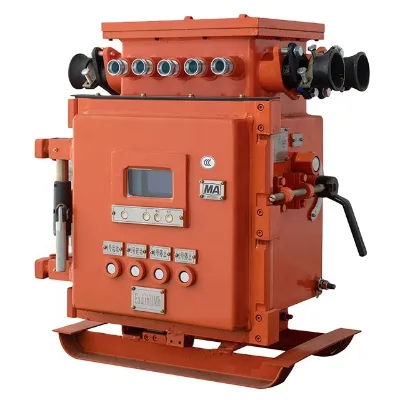
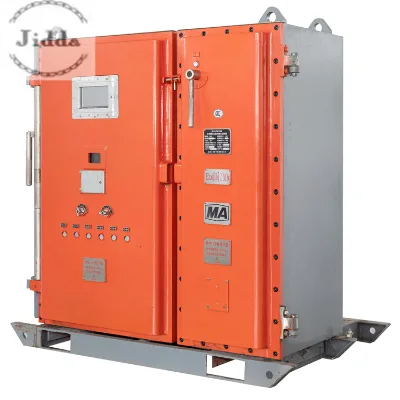

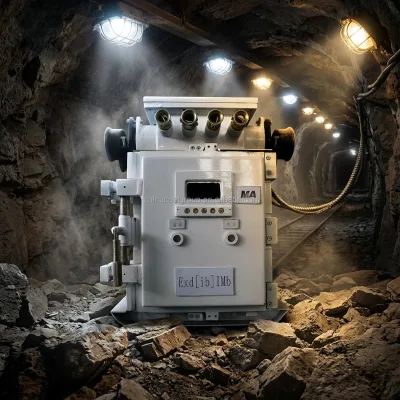
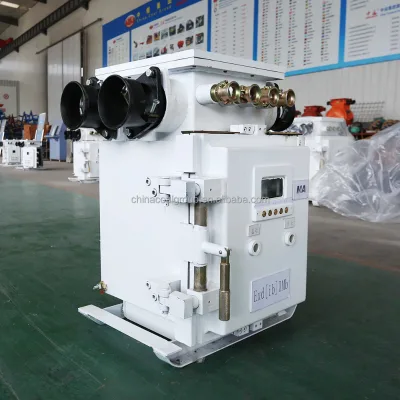
Explosion-Proof Vacuum Feeder Switch for Coal Mine (Electric isolating type)
$5.00 - $20.00
MOQ: 100 Pieces

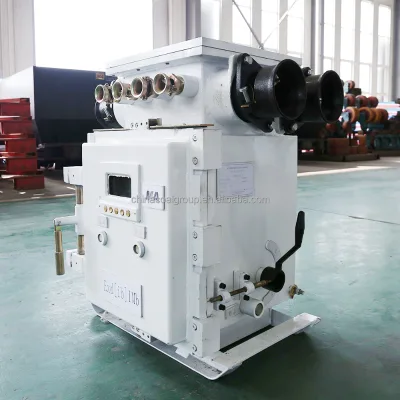
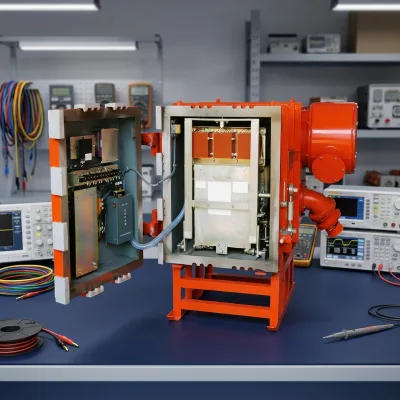
Comprehensive Sourcing Guide
Strategic Sourcing Guide for Explosion Proof Vacuum Feeder Switches
Understanding Technical Specifications and Operational Parameters
When sourcing an explosion-proof vacuum feeder switch, buyers must first establish a clear understanding of the technical parameters that define the equipment's suitability for hazardous environments. The core functionality of these switches relies on vacuum interrupters designed to safely extinguish arcs within pressurized enclosures, preventing ignition of surrounding explosive gases. Based on observed product data, the rated voltage for these units typically spans 660V and 1140V, which are standard industrial levels for heavy-duty mining and energy applications. The operating voltage range is observed to fall between AC 65V and 260V for control circuits, while the normal operating voltage range for the main power circuit is specified as 75% to 110% of the rated value.
The mechanical and electrical durability of the switch is a critical factor in long-term reliability. Data indicates a mechanical life of approximately 15,000 operations and an electrical life of 3,000 operations. These figures represent the expected lifespan under standard load conditions before maintenance or replacement is required. The short-circuit protection action time is a vital safety metric, with observed specifications requiring the system to act in less than 100 milliseconds to isolate faults before they escalate. Furthermore, the limit break current is noted at 9KA, which defines the maximum fault current the device can safely interrupt without catastrophic failure.
Physical construction details also play a significant role in installation and maintenance. The switches are often designed with a three-pole structure and a three-column disconnector configuration. The movement mode is frequently described as plug-in type, facilitating easier replacement and inspection. The open contact distance is a precise mechanical dimension, observed at 3±0.5 mm, which ensures proper arc quenching. The installation type is specified for outdoor high-voltage applications, suggesting robust housing designed to withstand environmental exposure. The color coding for these units is typically blue and white, aiding in visual identification on industrial sites.
Compliance, Certification, and Safety Standards
In the realm of hazardous location equipment, compliance is not merely a regulatory formality but a fundamental safety requirement. Buyers must verify that the explosion-proof vacuum feeder switches meet specific international and regional certification standards. Observed product attributes list ISO certification, along with CE and ISO 9001 standards, as common markers of quality assurance. However, the specific certification "ISISOGrounding" appears in the data, which suggests a unique or proprietary grounding certification that requires direct verification with the manufacturer to ensure it meets local safety codes.
The standard for the product is listed as AC65~260V, which likely refers to the control circuit voltage standard, while the main power standards are implied by the voltage ratings. It is crucial for procurement teams to distinguish between general quality certifications like ISO 9001 and specific safety certifications for explosive atmospheres, such as ATEX or IECEx, which are not explicitly detailed in the provided data but are industry norms for this equipment category. The grounding method is observed as "Single Ground," a specific configuration that must be compatible with the facility's existing earthing system to prevent static buildup and ensure operator safety.
Buyers should also scrutinize the "Normal operating voltage range" of 75~110%. Deviations outside this range can compromise the insulation integrity and the vacuum interrupter's ability to break the circuit. The presence of core components such as bearings, PLCs, engines, gearboxes, motors, pressure vessels, gears, and pumps indicates a complex assembly. While the primary function is switching, the integration of these components suggests a system that may require specific maintenance protocols. The warranty period for the core components is typically 1 year, while the overall product warranty may extend to 1.5 years, providing a baseline for supplier accountability.
Cost Drivers and Pricing Dynamics
The pricing of explosion-proof vacuum feeder switches is influenced by a complex matrix of technical specifications, material costs, and compliance requirements. The observed listed price range is exceptionally broad, spanning from $5 to $450,000 USD. This variance reflects the difference between small control components, auxiliary parts, and complete high-voltage switchgear assemblies. A buyer must carefully map their specific voltage and current requirements to the correct price tier to avoid budgeting errors.
The minimum order quantity (MOQ) is observed to range from 1 to 100 units. This flexibility allows for both pilot projects and large-scale industrial deployments. For single-item purchases, the selling unit is defined as a single item, but bulk orders may trigger different pricing structures. The weight of the units varies significantly, with observed weights of 230 kg and 100 kg, and a single gross weight of 24.000 kg for specific models. These weight differences directly impact shipping costs, which are a significant component of the total landed cost.
Packaging is another cost driver. The standard packing method is listed as "Case," with a single package size of 60x48x65 cm. The volume and weight of the packaging must be factored into logistics planning, especially for sea shipment, which is the observed primary mode of transport. The "Marketing Type" is listed as "Ordinary Product," which may imply that these are standard off-the-shelf items rather than highly customized solutions, potentially offering more competitive pricing. However, the availability of customization services suggests that tailored configurations will incur additional costs. Buyers should request detailed cost breakdowns that separate the base unit price, customization fees, packaging, and shipping to ensure transparency.
Typical Applications and Industry Suitability
The primary application for explosion-proof vacuum feeder switches is in industries where explosive atmospheres are a constant risk. The data explicitly lists "Energy & Mining" as the applicable industry. In these sectors, the equipment is often deployed in underground mines, oil and gas processing facilities, and chemical plants where methane, coal dust, or volatile organic compounds are present. The "Drilling depth: India" observation suggests that these units are utilized in deep drilling operations, likely in regions with specific geological and safety challenges.
The installation type is specified as "Outdoor High-voltage," indicating suitability for surface mining operations, substations, or outdoor processing plants where exposure to weather elements is a concern. The "Wet" model designation further supports the idea that these switches are designed for environments with high humidity or potential water ingress. The "Video outgoing-inspection: Provided" feature is particularly valuable for remote verification in critical infrastructure projects, allowing buyers to visually inspect the manufacturing and testing process before shipment.
The mechanical life of 15,000 times and electrical life of 3,000 times make these switches ideal for applications requiring frequent operation, such as motor control centers in mining conveyors or pumping stations. The "Manual" structure of operation allows for direct human intervention in emergency scenarios, while the "Plug-in Type" movement mode facilitates rapid replacement during maintenance windows, minimizing downtime in continuous production environments. The "Three Pole" configuration is standard for three-phase power systems common in industrial power distribution.
Supplier Evaluation and Verification Protocols
Evaluating suppliers for explosion-proof equipment requires a rigorous due diligence process that goes beyond standard commercial criteria. The observed product origin is "China," with a specific place of origin noted as "Shandong, China." While this provides a geographical baseline, buyers must verify the specific manufacturing capabilities of the supplier within this region. The brand name "Jidda" is observed, but buyers should not rely solely on brand recognition; instead, they must verify the supplier's track record in producing certified hazardous location equipment.
A critical aspect of supplier evaluation is the verification of core components. The data lists a wide array of components including PLCs, engines, bearings, gearboxes, motors, pressure vessels, gears, and pumps. Buyers must ensure that the supplier sources these components from reputable manufacturers and that the integration process maintains the explosion-proof integrity of the final assembly. The "Condition: New" attribute is standard, but buyers should confirm that the equipment is not refurbished or remanufactured unless explicitly stated and certified for such use.
The "Showroom Location: Ukraine" is an interesting data point that suggests the supplier may have a presence or distribution network in Eastern Europe. This could be relevant for buyers in that region regarding logistics and after-sales support. However, the primary manufacturing and quality control likely occur in China. Buyers should request a detailed supplier audit report that covers their quality management systems, specifically their adherence to ISO standards and any specific safety certifications for explosive atmospheres. The "Video outgoing-inspection" feature is a strong indicator of a transparent supplier, but buyers should also request third-party inspection reports to validate the visual data.
Quality Control and Long-Term Procurement Considerations
Ensuring the long-term reliability of explosion-proof vacuum feeder switches requires a robust quality control strategy. The observed warranty of 1.5 years for the product and 1 year for core components sets a baseline for supplier liability. However, buyers should negotiate extended warranty terms or service level agreements (SLAs) that cover critical downtime scenarios. The "Short circuit protection action time" of less than 100ms is a performance metric that must be verified through third-party testing, as this is a critical safety parameter that cannot be compromised.
Maintenance planning is essential for these high-voltage devices. The "Mechanical life" of 15,000 operations and "Electrical life" of 3,000 operations provide a schedule for preventive maintenance. Buyers should factor in the cost of spare parts, such as bearings and contact assemblies, into their total cost of ownership calculations. The "Single gross weight" of 24.000 kg and the "Single package size" of 60x48x65 cm must be considered when planning warehouse storage and on-site handling equipment.
The "Sea" shipment method implies a long lead time and potential exposure to moisture and salt during transit. Buyers should verify that the packaging includes desiccants and corrosion-resistant materials to protect the equipment during the journey. The "Customization: Available" attribute allows for tailoring the switch to specific site requirements, but buyers must ensure that any customization does not void existing certifications. The "Open contact distance" of 3±0.5 mm is a critical dimension that must be maintained during maintenance; buyers should ensure that the supplier provides the necessary tools and calibration equipment for this task.
Finally, the "Marketing Type: Ordinary Product" suggests that these are standard items, but the complexity of the core components and the specific safety requirements mean that buyers should treat them as specialized industrial assets. Long-term procurement considerations include establishing a relationship with the supplier for technical support, training, and rapid response to any field issues. The "Video outgoing-inspection" feature is a valuable tool for initial quality assurance, but ongoing quality control should involve regular audits and performance monitoring to ensure the equipment continues to meet safety and operational standards throughout its lifecycle.
Summary of Key Procurement Parameters
To facilitate a structured comparison and decision-making process, the following table summarizes the key technical and commercial parameters observed in the product data. This summary serves as a checklist for buyers to verify against their specific project requirements.
| Parameter Category | Observed Value / Range | Verification Requirement |
|---|---|---|
| Rated Voltage | 660V, 1140V | Confirm compatibility with site power grid. |
| Operating Voltage | AC 65 | Verify control circuit compatibility. |
| Short Circuit Time | <100ms | Require third-party test certificate. |
| Mechanical Life | 15,000 times | Assess maintenance schedule impact. |
| Electrical Life | 3,000 times | Plan for component replacement cycles. |
| Break Current | 9KA | Ensure system fault levels are within limit. |
| Certifications | ISO, CE, ISO 9001, ISISOGrounding | Verify local regulatory acceptance. |
| Installation Type | Outdoor High-voltage | Confirm environmental rating (IP). |
| Structure | Three Pole, Three-column Disconnector | Check compatibility with existing busbars. |
| Weight | 100 kg, 230 kg, 24 kg (Gross) | Plan for lifting and handling equipment. |
| Warranty | 1.5 years (Product), 1 Year (Core) | Negotiate extended terms if possible. |
| Origin | Shandong, China | Verify manufacturing facility audit. |
| Shipment | Sea | Account for transit time and moisture protection. |
By adhering to these detailed specifications and verification protocols, buyers can ensure the acquisition of explosion-proof vacuum feeder switches that meet the rigorous safety and performance standards required for hazardous industrial environments. The focus must remain on evidence-based evaluation, prioritizing certified safety features and verified performance metrics over marketing claims.
FAQs
What are the rated voltage options for these switches?
The rated voltage options are 660V and 1140V for heavy-duty industrial applications. These units support a normal operating voltage range of 75% to 110% of the rated value to ensure stable performance in mining and energy sectors.
How long is the mechanical life of the switch?
The mechanical life is approximately 15,000 operations under standard load conditions. This durability ensures reliable performance for frequent switching tasks in continuous production environments like underground mines.
Can the product be customized for specific needs?
Yes, customization is available to meet specific operational requirements. Buyers should contact suppliers directly to discuss tailored configurations while noting that standard models are typically classified as ordinary products.
Which certifications do these switches typically hold?
These switches typically hold ISO certification and meet CE standards. Some listings also reference specific grounding certifications, though buyers must verify compliance with local safety codes for explosive atmospheres.
What is the short circuit protection action time?
The short circuit protection action time is less than 100 milliseconds. This rapid response isolates faults quickly to prevent escalation and ensures safety in high-voltage outdoor installations.
Where are these products manufactured?
These products are manufactured in China, specifically originating from Shandong province. Buyers should verify the specific factory location and quality control processes before placing large orders.
What is the warranty period for core components?
The warranty period for core components is 1 year, while the overall product warranty is 1.5 years. This coverage provides a baseline for supplier accountability regarding critical parts like bearings and motors.